Amz Integrated Farm
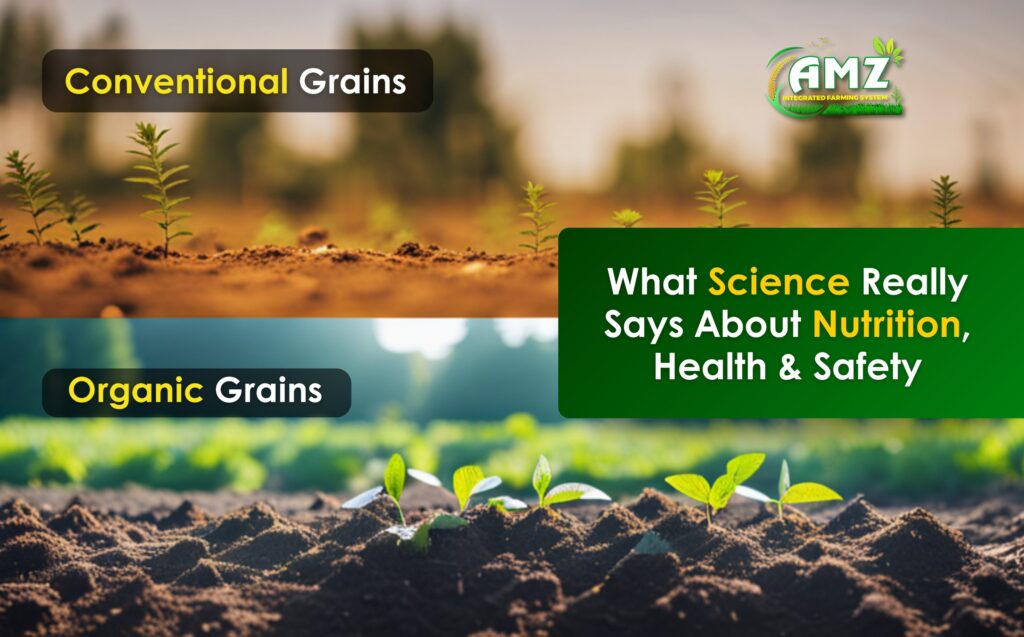
The debate around Organic Grains vs Conventional Grains has become increasingly important as people grow more conscious about daily food choices. Staples like rice, millets, pulses, and wheat are consumed every day, so even small differences in quality can have long-term health effects.
Many consumers now ask: Are organic grains truly healthier, or is the difference overstated?
To answer this, we need to look at scientific evidence, not marketing claims. This article explores Organic Grains vs Conventional Grains by comparing nutrition, pesticide exposure, gut health, and sustainability—helping you make an informed decision.
What Are Organic Grains?
Organic grains are grown using natural farming methods that avoid synthetic inputs and focus on soil health.
Key Features of Organic Grains
No synthetic pesticides or herbicides
No chemical fertilizers
Non-GMO seeds
Natural compost and organic manure
Crop rotation for soil balance
In the Organic Grains vs Conventional Grains comparison, organic farming prioritizes long-term soil fertility, which directly impacts grain quality and safety.
What Are Conventional Grains?
Conventional grains are cultivated using modern industrial farming techniques designed to increase yield and speed up production.
Common Conventional Farming Practices
Chemical fertilizers for rapid growth
Synthetic pesticides and fungicides
Hybrid or chemically treated seeds
While conventional grains are widely available and affordable, studies show they may carry chemical residues, making Organic Grains vs Conventional Grains a critical food-safety discussion.
Organic Grains vs Conventional Grains – Nutritional Comparison
Macronutrients and Minerals
Scientific studies indicate that calories and protein levels are often similar in both types. However, when comparing Organic Grains vs Conventional Grains, organic options frequently show higher mineral availability, including:
Iron
Magnesium
Zinc
Phosphorus
This advantage comes from biologically active soil that improves nutrient absorption naturally.
Antioxidant Content
Another key difference in Organic Grains vs Conventional Grains is antioxidant levels. Organic grains tend to contain more:
Polyphenols
Flavonoids
These antioxidants help reduce inflammation, support immunity, and protect the body from oxidative stress. Plants grown organically develop stronger natural defense systems, which benefit human health.
Pesticide Residues – A Scientific Concern
One of the most important factors in the Organic Grains vs Conventional Grains debate is pesticide exposure.
Conventional grains are more likely to contain pesticide residues
Organic grains show significantly lower or near-zero synthetic residues
Long-term exposure to pesticides has been linked to hormonal imbalance, neurological issues, and weakened immunity. This makes organic grains a safer choice for regular consumption.
Impact on Gut Health
Gut health plays a major role in digestion and overall well-being. Organic grains support a healthier gut because:
Natural fiber structure remains intact
No chemical interference with gut bacteria
Better nutrient absorption
In the Organic Grains vs Conventional Grains comparison, organic grains are often easier to digest and gentler on the stomach.
Are Organic Grains Better for Children?
Children are more vulnerable to chemical exposure due to their developing bodies.
Why Organic Grains Are Safer for Kids
Lower toxin intake per body weight
Supports physical and cognitive development
Strengthens immunity over time
For families, choosing organic staples is a preventive health decision backed by science.
Environmental Impact – Beyond Nutrition
The Organic Grains vs Conventional Grains discussion goes beyond health and into sustainability.
Environmental Benefits of Organic Farming
Improves soil fertility
Protects biodiversity
Reduces water pollution
Supports small-scale farmers
Healthier ecosystems produce healthier food, creating a sustainable food system for future generations.
Cost vs Value – Are Organic Grains Worth It?
Organic grains may cost more initially, but they offer greater long-term value:
Reduced health risks
Cleaner daily nutrition
Ethical and transparent sourcing
Environmental responsibility
From a long-term perspective, organic grains are an investment in health, not an expense.
Why AMZ Farms Supports Organic Farming
At AMZ Farms, organic farming is chosen for one simple reason—trust in clean food. By following a farm-to-table approach, AMZ Farms delivers chemical-free grains sourced directly from farmers who follow traditional and sustainable practices.
This commitment ensures purity, safety, and nutritional integrity in every grain.
Final Verdict – What Science Confirms
Organic Grains
✔ Lower pesticide residues
✔ Higher antioxidants
✔ Better mineral absorption
✔ Safer for long-term consumption
✔ Environmentally sustainable
Conventional Grains
✔ Lower upfront cost
✖ Possible chemical exposure
✖ Environmental concerns
Science consistently supports organic farming as the safer and more sustainable choice.
Conclusion
The comparison of Organic Grains vs Conventional Grains makes one thing clear—organic grains offer cleaner nutrition, better safety, and long-term health benefits. Backed by science and supported by sustainable practices, organic grains are not a trend but a smarter lifestyle choice.
By choosing trusted sources like AMZ Farms, consumers can enjoy pure, farm-fresh grains while supporting ethical farming and a healthier future 🌾